Best Foot Rest for Desk Work: Under-Desk Picks That Actually Help
Office chairs
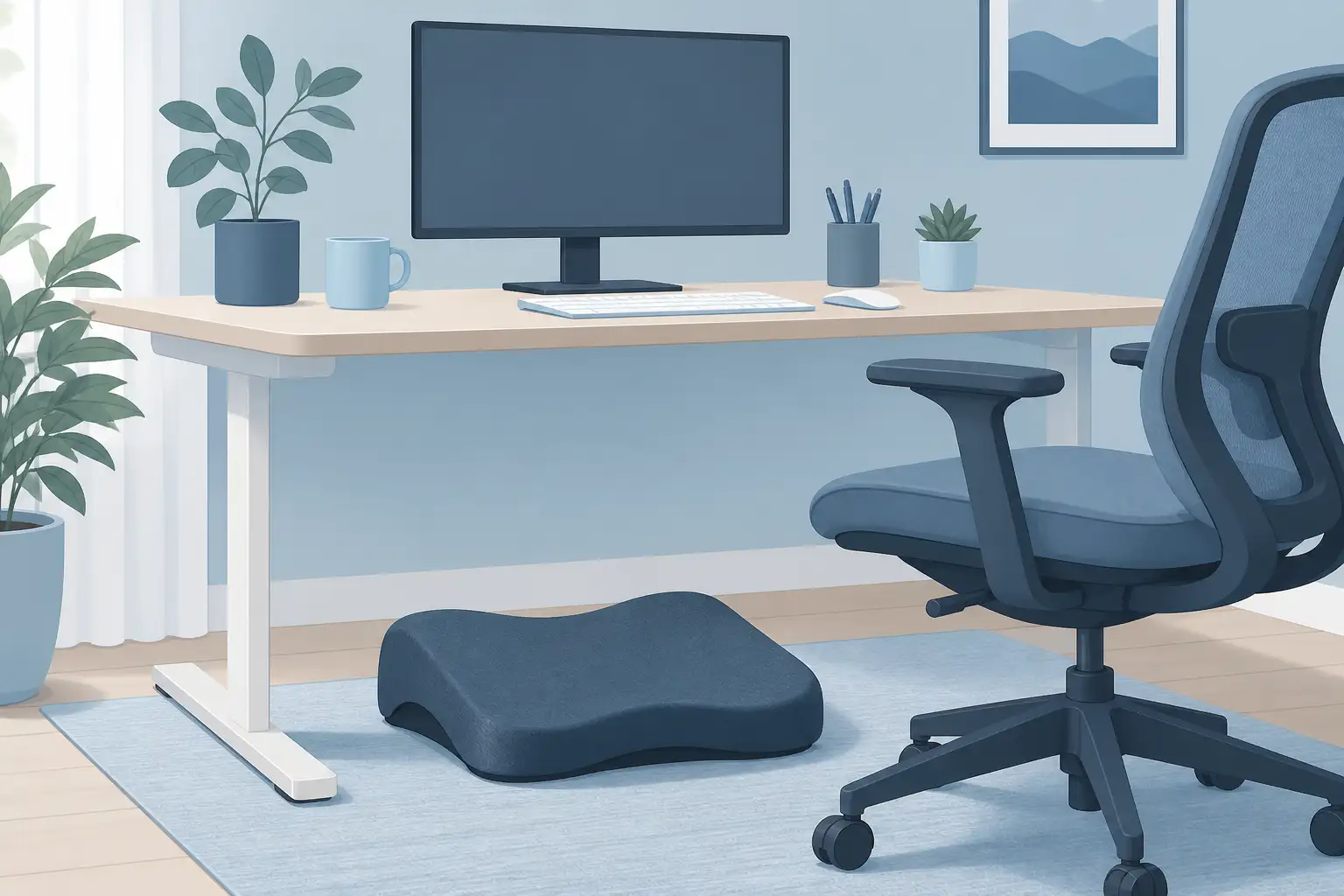
A foot rest for a desk closes a small gap when your chair is set for typing but your feet do not reach the floor. These two foam picks cover stable and gently rocking support.
Our picks
A footrest is a small purchase that can make a chair feel more settled. When your feet have support, you are less likely to perch on the front edge of the seat. That helps you use the chair's backrest and lumbar support the way they were intended. More office chair guides cover the fit problems a footrest cannot solve on its own.
The job is narrow, and it helps to say what it is. A footrest closes the gap that is left after the chair is set so your elbows sit near desk height. It does not fix a seat that is too deep, armrests that miss the desk, or a desk that is simply too tall for you. Measure the gap first, then buy.
What does a footrest fix, and what does it not?
A footrest supports the soles when your chair is set correctly for typing but your feet still hang above the floor. It keeps your thighs level and stops you from sliding forward to reach the ground. It does not lower a desk, shorten a seat pan, or add the lumbar support an oversized chair is missing.
That limit matters because most "my chair is uncomfortable" problems are the wrong size, not the wrong accessory. Set the chair first. If your feet still float a few inches, a footrest is the right tool. If your knees sit above your hips or the seat edge digs behind your knees, the chair or desk is the problem.
How big a gap does a footrest cover?
Most foam footrests cover a gap of about 2 to 4 inches. If you need more than that, choose a taller or adjustable model rather than stacking cushions. Past about 6 inches the chair is usually the wrong height, and no footrest will feel stable.
How tall should a footrest be?
Match the footrest to the distance between your soles and the floor after the chair is at typing height. Sit down, let your feet hang naturally, and measure that gap with a tape. A 3-inch gap points to a standard foam rest; a 5-inch gap points to an adjustable model.
First set the chair correctly
Set your chair so your elbows are close to desk height and your shoulders stay relaxed. If your feet are then slightly unsupported, place a footrest under them. Do not lower the chair until your feet touch if that makes you reach up to type. Reaching up all day is worse for your shoulders than a supported foot.
The rest should be wide enough for both feet and low enough that it does not force your knees high into the desktop. Try it for a week, not five minutes. A small angle or soft surface can feel different during a full workday. If your feet dangle even after the chair is as low as it goes, a footrest gives them a platform, but it will not fix a desk that is still too high. Check standing desk height if the whole workstation feels off.
Where should a footrest sit?
Directly under your feet, close enough that your knees clear the desk edge. Both feet should rest flat or at a slight angle, with your thighs roughly level. Pushed too far back, a footrest makes you reach with your toes and rounds your lower back.
Foam or a hard platform?
Most home workers with a chair that is almost right only need foam. Save adjustable metal or plastic platforms for shared desks or when you know the exact angle you want. A hard platform also lasts longer if you put your full weight on it every day.
Hero pick: Everlasting Comfort Foot Rest
The Everlasting Comfort Foot Rest for Under Desk at Work is a dependable foam option. It has a washable cover, a non-slip base, and a shape that can be flipped for a gentle rocking position. At about $37.99, it is the lower-cost of the two picks here and the easier one to recommend first.
Foam is comfortable but not infinitely firm. If you want a precise height adjustment or a hard platform, look for an adjustable plastic or metal model instead. For a chair-height gap of a few inches, the foam design is usually simpler. Place it so both feet rest evenly; if one foot hangs off the edge, the rest is too narrow or pushed too far under the desk.
Who the Everlasting Comfort is for
Buy it if you want a soft, washable rest for a 2 to 3-inch gap and you like the idea of a gentle rock. Skip it if you need a precise height or a firm surface to push against.
Shop: Everlasting Comfort Foot Rest
Taller alternative: ErgoFoam Adjustable Foot Rest
The ErgoFoam Adjustable Foot Rest is the taller pick when a standard foam cushion still leaves your feet dangling. The taller profile and denser foam hold their shape better under daily use than the softest budget pads, and the removable base is what lets it reach a bigger gap.
It costs more than the Everlasting Comfort rectangle, about $41.95. Buy it when you have measured the gap and know you need extra height, not when the chair itself is the wrong size. The foam can sag in the middle after several years of heavy use, so it is a replaceable comfort item rather than a lifetime buy.
Who the ErgoFoam Adjustable is for
Buy it if you need a 5 to 6-inch lift, share the desk with a taller person, or want the densest foam in this lane. Skip it if a 2 to 3-inch gap is all you have and you would rather pay less.
Shop: ErgoFoam Adjustable Foot Rest
Everlasting Comfort vs ErgoFoam: which foam rest?
Both flip to a rocker, and both are washable. The decision comes down to height: the Everlasting Comfort is the better value for a small gap, and the adjustable ErgoFoam is the one that reaches under a taller desk.
Does a footrest help lower back pain?
It can help by keeping your feet supported so you stop perching on the front of the seat. When your feet are planted, you are more likely to lean back and let the chair's lumbar curve do its work. It is not a treatment for an injury or a substitute for a chair that fits.
If back pain is the main problem, fix the chair and monitor height first. A best ergonomic office chair with real lumbar support does more than any accessory under the desk. Use a footrest as the finishing touch for a small gap, not as the fix for a deep seat or missing support.
Common footrest mistakes
Buying before adjusting the chair. Lower the seat or raise the desk first if that fixes the gap without accessories.
Using a rest that is too tall. Knees should not hit the underside of the desktop. Past about 6 inches the chair height is the real issue.
Leaving it on the floor when you stand. Tuck it under the desk so it does not become a trip hazard on a sit-stand setup.
Expecting it to fix a deep seat. Perching forward means the chair is too big. Swap the chair, then add a rest if a small gap remains.
Pair the rest with the rest of the setup
Once your feet and chair are sorted, set the display. A monitor riser or best monitor arm can bring the screen up without making you sit taller. A wrist rest keeps the keyboard half of the setup neutral too. For a complete pass on ergonomics, read best ergonomic office chair and confirm the seat depth and lumbar zone match your body.
A footrest also pairs well with a lap desk on days you work from the couch. Different rooms, same idea: support the limbs that would otherwise hang or tilt at odd angles.
Bottom line: The Everlasting Comfort Foot Rest is the best foot rest for a desk when you need a washable, stable foam platform with an optional rocker side. Choose the ErgoFoam Adjustable Foot Rest when you need a taller 5 to 6-inch lift or share the desk. Use either to close a small height gap after setting the chair for the desk. If the chair still feels wrong, solve the chair fit instead of stacking more accessories underneath it. If you want a softer rest position during long calls or breaks, an under desk foot hammock takes weight off your lower legs in a different way. Browse more on the blog or start from the homepage.
Frequently Asked Questions
When do I need a foot rest for a desk?
Use one when your chair is correctly set for the desk but your feet do not sit comfortably on the floor. A small gap of a few inches is the sweet spot.
Can a footrest fix a chair that is too large?
No. It can support your feet but cannot make a deep seat or badly placed lumbar support fit. Start with a better office chair for a short person if the chair itself is wrong.
Should a footrest rock?
Some people like a gentle rocking option for ankle movement. Others prefer a stable platform. Both are reasonable. Try the still position first, then flip to rocker mode if your ankles feel stiff.
Where should a desk footrest sit?
Directly under your feet, not pushed so far back that your knees hit the desk edge. Both feet should rest flat or at a slight angle without forcing your thighs upward.
Is foam or a hard platform better?
Foam is softer and cheaper for a modest height gap. Hard adjustable platforms last longer if you want precise angles or share the desk with someone taller.
Does a footrest help with lower back pain?
It can reduce the urge to perch on the front of the seat, which helps you use the chair back. It is not a substitute for a chair that fits or breaks from sitting.
Can I use a footrest with a standing desk?
Yes when you sit at the desk part of the day. When you stand, tuck it under the desk or move it aside so it does not become a trip hazard.
How tall should a footrest be?
Match the gap between your soles and the floor after the chair is at typing height. Most foam models cover two to four inches. Measure before you buy an adjustable model.