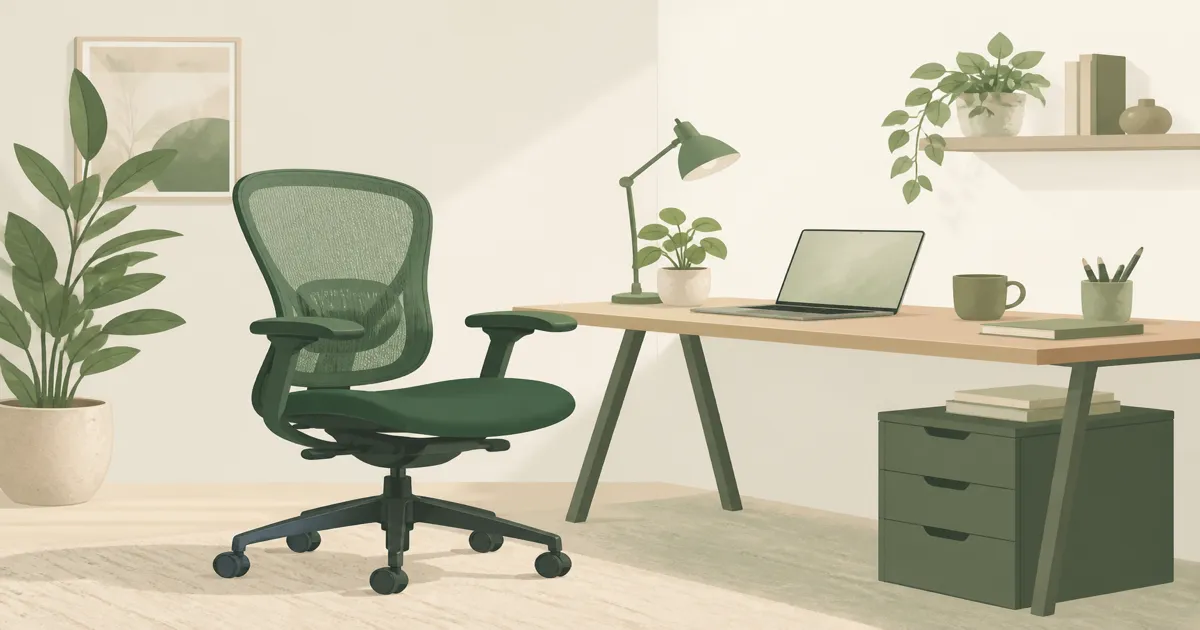
Best Ergonomic Office Chair: Lumbar, Arms, Seat Height
Office chairs
The best ergonomic office chair is the one that fits your height, supports your lower back, and adjusts enough that a long day does not flatten your posture.
Our picks
“Ergonomic” is printed on almost every office chair box. Your back still knows the difference between a chair that adjusts and a chair that only looks serious in a photo. What you want is simpler: seat height that plants your feet, lumbar you can place on your lower curve, and armrests that let your shoulders drop at the desk you actually have.
If lower-back support is the whole reason you are shopping, see office chair for back pain. If you run warm and want airflow first, see mesh office chair. If you are weighing a racing-style seat, see gaming chair vs office chair. Pair any chair with a desk set to the right height using standing desk height. For a broader buying map, use best office chair.
To weigh more adjustments side by side, browse the office chairs category.
Seat height, lumbar, and arms
Set seat height so your feet are flat and your thighs sit roughly level. If the desk is a dining table, the chair cannot save shrugged shoulders. Drop the keys with a keyboard tray or lower the desktop first.
Lumbar should land in the small of your back, not poke one vertebra or sit as a decorative bump in the mesh. A pillow on a string that slides down is not adjustable lumbar.
Armrests need to meet typing height. Too high and you hike your shoulders. Too low and your elbows float. 3D arms help on a home desk that will not move. Mesh stays cooler on stacked video calls. Foam can feel plush in a cold room and then pancake.
Quick comparison
Top pick: SIHOO M57 Ergonomic Office Chair
The SIHOO M57 is the best ergonomic office chair for most people who sit real workdays at home. Mesh keeps your back cooler than a thick foam shell. 3D armrests help you pull under the desk without shrugged shoulders. Adjustable lumbar and a headrest give you room to tune fit across a week of meetings, not just a five-minute unboxing sit.
Assembly is a quiet hour. Set lumbar height before you decide the chair “does not work.” Seat depth and cylinder range are personal. Keep the box until you finish a few long call days.
Who it is for: Full-time remote and hybrid workers who want mesh cooling and real adjustments without a boutique chair budget.
Skip if: You need seat-depth adjustment, a much wider pan, or a clinician-fitted medical chair. This is a capable task chair, not treatment.
Shop: SIHOO M57 on Amazon
Best value: TRALT Ergonomic Office Chair
The TRALT is the ergonomic chair we name when the adjustments that matter should not cost $200. The lumbar pad adjusts in and out on a knob, so it can sit on your lower curve instead of floating behind you. The mesh back breathes, the base is rated to 330 lb, and the Class 3 BIFMA gas lift is built not to sink through the day. For a first real ergonomic chair, it covers height, lumbar, and airflow at once.
What it does not cover is your neck and your elbows. There is no headrest, and the arm pads flip up and move in height but do not pivot out to meet a keyboard the way the M57's 3D arms do. If either of those matters, spend up.
Who it is for: First real ergonomic chair on a tight budget.
Skip if: You want a headrest or 3D arm travel.
Shop: TRALT on Amazon
Mid-range mesh: Hbada P5 Ergonomic Office Chair
The Hbada P5 is the smarter spend when the SIHOO feels like more chair than you need, but you still want adjustable lumbar and mesh. It covers daily typing posture for a lot of home offices without paying for every armrest axis. If your desk apron is thick, confirm the arms can drop low enough before you fall for the photo.
Seat foam is personal. If the pan feels short or hard in week one, use the return. Do not wait three months hoping it will break in.
Who it is for: People who want mesh and movable lumbar at a friendlier price, and who do not need 3D arm travel.
Shop: Hbada P5 on Amazon
Best budget: Amazon Basics Breathable Mesh Mid-Back
The Amazon Basics mesh chair is enough when you need a real desk chair now and plan to upgrade later. You get airflow, height adjustment, and basic lumbar without racing-shell bulk. You do not get the SIHOO’s adjustment depth.
A cheap chair under a desk that sits too high still ruins shoulders. Fix height with standing desk height in parallel. Use this seat for shorter blocks, a secondary office, or while you save for the M57.
Who it is for: Tight budgets, light daily sitting, or a temporary setup.
Shop: Amazon Basics mesh chair on Amazon
How to know the chair actually fits
Feet and hips. Thighs roughly parallel to the floor. Knees near hip level.
Lower back. Support should land in the lumbar curve. A pillow that slides down is not adjustable lumbar.
Seat depth. Keep about a fist of space between the seat edge and the back of your knees when you sit against the backrest.
Arms and shoulders. Elbows near 90 degrees when you type. If armrests will not go low enough, you shrug.
Mesh, foam, and all-day heat
Mesh backs dump heat and keep a lighter feel in warm rooms. Foam and fabric backs can feel cozier in cooler spaces. Neither is automatically more “ergonomic.” Choose for climate, pets, and cleaning.
Week-one break-in checklist
- Photo every dial and lever at the settings that felt best on day one.
- After three workdays, nudge lumbar height by one notch and note whether afternoon tightness moves.
- If wrists feel jammed, check desk height before blaming the chair. A keyboard tray can help when the top will not go low enough.
- Confirm casters feel safe on your floor. Add a mat if the chair skates.
- Keep the box until you finish a full week of meetings, not only quiet deep-work blocks.
Bottom line: Buy the best ergonomic office chair you can prove fits you. Start with the SIHOO M57 for adjustments, pick the TRALT for the best value, step to the Hbada P5 for mid-range mesh, and use Amazon Basics only as a breathable budget bridge. Want a short posture-reset block instead of another task chair? See kneeling chair. More chair and desk guides live on the blog and homepage.
Frequently Asked Questions
What is the best ergonomic office chair for most people?
The SIHOO M57 is the best starting chair for adjustable lumbar, mesh cooling, and 3D armrests. If budget is tighter, start with the TRALT for a moving lumbar pad and a 330 lb base, step to the Hbada P5 for mid-range mesh, and still set height, lumbar, and arms before you decide.
Is “ergonomic” a regulated claim?
No. Many chairs use the word loosely. Treat it as marketing until you can place lumbar on your lower back and drop your shoulders at the desk.
Do I need a headrest?
Only if you recline often or want neck support on breaks. It is optional for focused typing posture.
Mesh or foam for an ergonomic chair?
Mesh stays cooler. Foam can feel plush. Pick based on room temperature and how you clean, not which one sounds healthier.
Can ergonomics fix a desk that is too high?
Not fully. A great chair still fights a desk that forces shrugged shoulders. Fix desk height or use a keyboard tray so elbows can drop.
How do I adjust an ergonomic office chair for my height?
Set seat height first so your feet are flat, then move the lumbar support into the small of your back and bring the armrests to typing height. Change one thing at a time and sit a full work block before you judge it.
How long should I try an ergonomic chair before returning it?
Give it about a week of real workdays, not one unboxing sit. Keep the box and the return window open until you have nudged the lumbar and confirmed your shoulders stay down.