Office Chair Armrest Pads (2026): Memory Foam Covers for Hard Armrests
Office chairs
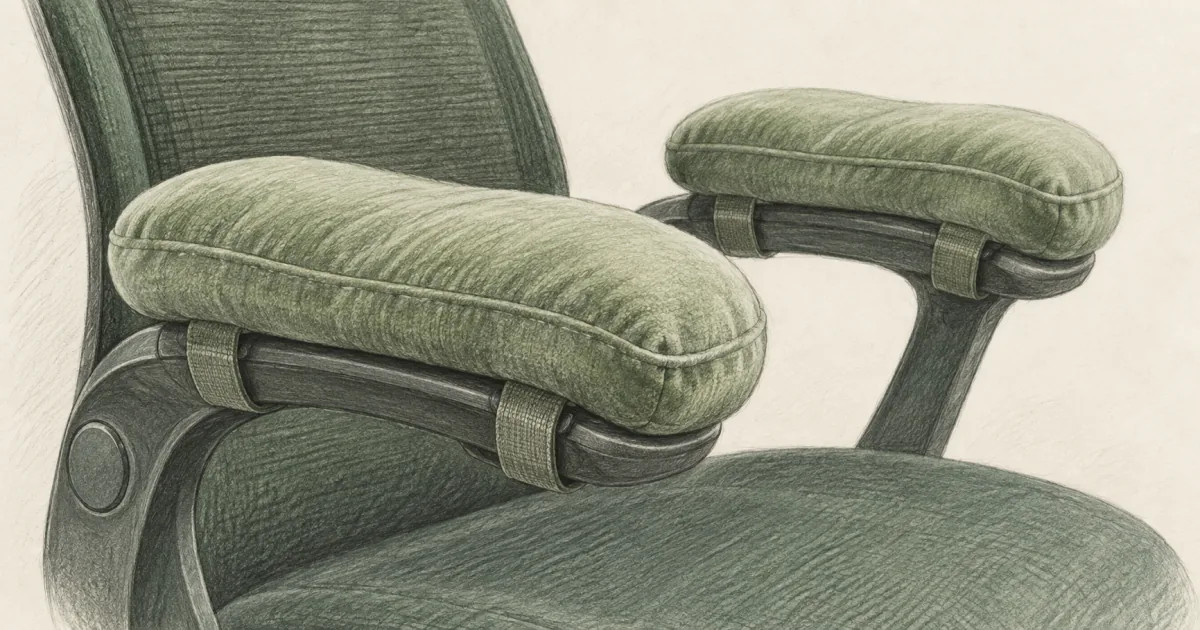
Office chair armrest pads add memory foam cushion and a washable cover over hard plastic armrests. The right pair fits your armrest width, stays put through typing, and slips off for washing when the cover gets gross.
Our picks
Hard plastic armrests are how a lot of people end up with sore elbows and red forearms by the end of the day. The chair is fine. The lumbar is fine. The arms just hurt. A pair of memory foam armrest pads adds a soft, washable layer that cushions the elbow without replacing the chair, which is usually the cheaper fix.
Browse more seating gear in our office chair collection, then compare the wider chair market in best office chair. If your real pain is lower back rather than elbows, see office chair for back pain before you assume armrest pads are the answer.
What armrest pads actually change
A pad does three jobs. It cushions the elbow, covers damaged armrest surfaces, and slightly raises the armrest height. None of those jobs fix a chair with the wrong seat depth, but they do fix the daily grind of leaning on a hard plastic rectangle for eight hours.
The pad also makes the armrest feel warmer in a cold room. That sounds small, but cold plastic on bare skin for hours is one of the everyday annoyances a memory foam cover solves without you thinking about it.
Fit is the only thing that matters
The wrong size pad is the difference between a soft cushion that stays put all day and a cover that bunches, slides, or pops off the moment you push off the armrest to stand. Measure first.
Most office chairs use flat armrests between 6 and 11 inches long and 3 to 5 inches wide. Medium pads fit that range. Small armrests under 6 inches need a small-size pad, and long armrests over 11 inches need a large or extra-long version. Width matters too. A pad that is too wide will bunch over the edges.
Memory foam vs gel vs leather covers
Memory foam is the easiest pick for a first pair. It conforms to your elbow, softens hard plastic, and comes in stretch-fit covers that install in seconds. Gel pads feel firmer and stay cooler, which is the right answer if you sweat through fabric covers or want a less sink-in feel. Leather or faux-leather covers look more like part of the chair but do not breathe, so they get sticky in warm rooms.
For most home offices, memory foam in a velvet or polyester cover is the right balance of comfort, breathability, and easy washing.
Top pick: Aloudy Medium memory foam pads
The Aloudy Ergonomic Memory Foam Armrest Pads in medium are the right answer for most office chairs. The stretch cover slides over 6 to 10.5 inch armrests without straps, so install takes seconds. The 1.5 inch memory foam cushions the elbow and the velvet cover stays comfortable against bare skin. The cover unzips for washing, which matters more than you think after a few months of daily use.
The foam will eventually flatten. Plan to replace the pads every two to three years if you sit at the desk eight hours a day. The cover usually outlasts the foam.
Who it is for: Most task and gaming chairs with flat armrests in the 6 to 10.5 inch range.
Skip if: Your armrests are shorter than 6 inches or longer than 10.5 inches, or you want a pad that locks in place with straps.
Shop: Aloudy armrest pads on Amazon
Best for strapped fit: Everlasting Comfort
The Everlasting Comfort Office Chair and Wheelchair Arm Pads use adjustable double-sided fastener straps instead of a stretch cover. The straps wrap under the armrest and tighten, which keeps the pad from sliding when you push off the arms to stand. The foam is slightly thicker than a basic stretch pad, which adds about half an inch of armrest height.
Strap fasteners are the right pick if your chair has curved or rounded armrests that a stretch cover slips off of. They are also the safer pick if you stand up from the chair using the arms many times a day.
Who it is for: Curved armrests, frequent stand-ups, and anyone who has had stretch pads slide off in the past.
Skip if: You want a slimmer pad or you want a flush, built-in look.
Shop: Everlasting Comfort arm pads on Amazon
Best gel-cooling alternative: LargeLeaf
The LargeLeaf gel and memory foam arm pads are the right answer when standard foam covers run a bit warm. The mesh cover has a cooling gel layer on top of the memory foam, which keeps forearms more comfortable in a warm room or a long meeting block. The pads install with adjustable velcro straps and the outer cover unzips for washing.
The pads are slightly bulkier than a basic stretch-fit pad because of the gel layer, which is the main tradeoff. If you want the thinnest possible fit, a stretch-fit pad is still the right answer.
Who it is for: Warm offices, anyone who finds foam covers a bit warm, and people who want adjustable straps on pads that do not slip.
Skip if: You want the slimmest possible fit or you do not need a cooling layer.
Shop: LargeLeaf gel armrest pads on Amazon
Install in under a minute
For stretch-fit pads, hook one end of the cover over the front of the armrest and pull the other end over the back. The foam should sit flat without any bunching. If the cover is loose, the pad is too big. If the pad is hard to slide on, the pad is too small.
For strap-fit pads, lay the pad on top of the armrest, wrap the straps under the armrest, and tighten each strap until the pad does not move when you push off the arm. Trim the excess strap with scissors once you have the right tension, or tuck it under the pad.
Both styles benefit from a quick test sit. Type for ten minutes, push off the arm a few times, and check whether the pad has shifted.
When armrest pads are not the answer
Skip armrest pads if the real pain is in the lower back, the wrists, or the neck. Lumbar support, wrist rests, and monitor height are separate fixes. Pads also do not help with nerve pain that runs from the elbow down the forearm, which usually needs stretching, posture changes, or a clinician's input.
Skip pads if your armrests are already well padded and the foam still feels supportive. Adding another layer just raises the armrest height without adding comfort.
Skip pads if your armrests have small rectangular shapes shorter than 6 inches. Most pads are sized for the common flat 6 to 11 inch armrest and will not fit a narrow arm.
Care and replacement
Wash the cover every few weeks if you sit at the desk daily. Most covers unzip and go in the washing machine on cold with similar colors. Tumble dry low or air dry. Do not put the memory foam in the dryer.
Replace the pads when the foam stops bouncing back overnight. Permanent dents are the signal that the foam is compressed and the pad is no longer doing its job. Plan on two to three years for a daily-use office chair.
Pairing armrest pads with other chair fixes
Armrest pads work alongside the rest of the chair, not instead of it. If your lumbar support is the weak point, start with best lumbar support for office chair. If the seat pan is too short or too deep, no armrest pad will fix that. Pads are the right upgrade when the chair is mostly good and the elbows are the only complaint.
For a full chair swap, best office chair compares the strongest picks across the home office market, and mesh office chair is the right guide if your office runs warm.
Bottom line
The best office chair armrest pads for most home offices are the Aloudy Medium memory foam pads, which fit 6 to 10.5 inch armrests and have a washable cover. Pick the Everlasting Comfort strap pads when you want a locked-in fit through typing and standing. Choose the LargeLeaf gel pads when you want a cooling top layer for warm offices. Measure first, then install. More seating guides live in the office chairs category and on the homepage.
Frequently Asked Questions
Do armrest pads fit any chair?
Most pads fit the common 6 to 11 inch flat armrests found on task and gaming chairs. Measure the length of your armrest from front to back and check the pad's listed size range before you order. Very small armrests under 6 inches and very wide armrests over 12 inches need special sizes.
How do you install office chair armrest pads?
Stretch-fit pads slide over the armrest like a sleeve. Pull one end on first, then stretch the cover over the other end until the foam sits flat. Strap-fit pads use velcro or elastic bands that wrap under the armrest. Tighten each strap so the pad does not slide when you push off the armrest to stand.
Are armrest pads worth it?
Yes if your armrests are hard plastic, cold to the touch, or covered in flaking faux leather. Pads cushion the elbow, reduce the pressure that leads to sore forearms, and cover damaged surfaces without buying a new chair. Skip them if your armrests are already padded and the foam still feels supportive.
Memory foam or gel armrest pads?
Memory foam gives a soft, body-conforming feel that works for most people. Gel pads stay cooler and feel firmer, which some people prefer for hot offices. Both work; memory foam is the easier find and the safer pick if you have not used armrest pads before.
Will armrest pads raise my armrest height?
Most pads add about one inch of height. That is helpful if your armrests feel too low and your chair does not let you raise them. It is a problem if your armrests already sit at the top of the chair's adjustment range, because the pads can push your elbows above the desk height.
Can I wash office chair armrest pads?
Most covers are removable and washable. Unzip the cover, machine wash on cold with similar colors, and tumble dry low or air dry. Memory foam should not go in the dryer. Replace the foam insert when it stops bouncing back, usually after two to three years of daily use.
Do armrest pads help with elbow pain?
Pads help when the pain comes from leaning on hard plastic or rough faux leather. They do not help with nerve pain, tendinitis, or pain that runs from the elbow down the forearm. See a clinician if the pain does not improve after a week of using the pads.
How long do memory foam armrest pads last?
Quality memory foam pads last two to three years of daily office use before the foam stops bouncing back. The cover usually outlasts the foam. Replace the foam when you see permanent dents that do not spring back overnight.