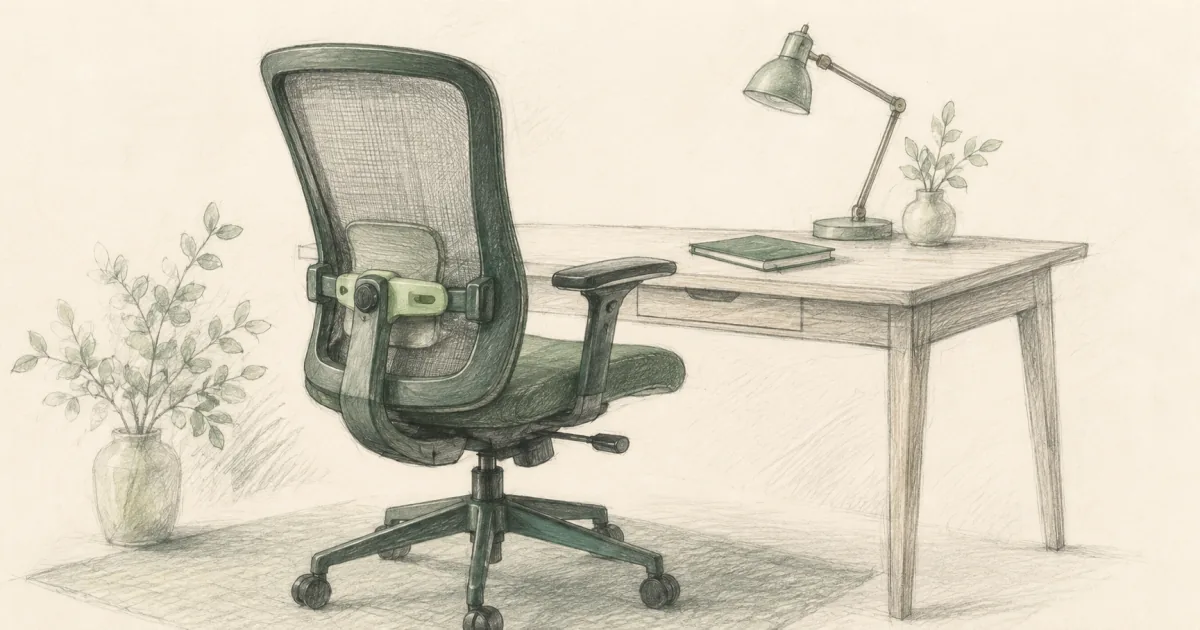
Best Office Chair for Hip Pain (2026): Marsail + GABRYLLY Picks
Office chairs
The best office chair for hip pain for most home offices is the Marsail mesh ergonomic chair with adjustable lumbar support. Choose the GABRYLLY with footrest when hip pressure builds up during long sits, or the popular GABRYLLY high-back when you want more adjustability on a budget.
Our picks
Hip pain at a desk rarely comes from one bad day. It builds when the chair seat is too deep, the lumbar sits above the lower back, or the cushion develops a hot spot after a year of use. Most office chairs are built for the average body. Hip pain needs a chair that adjusts lumbar up and down, has a wide seat pan, and lets the hips sit at or slightly above knee height.
This guide is for people who already know their hips hurt at the desk and want a chair that supports the joint instead of pressing on it. Browse the office chair collection for the full set, start with the best office chair for the broader comparison, and read office chair for back pain for the lower back side of the same problem. Hip pain often walks in with back pain, but the chair setup is a little different.
What makes an office chair help with hip pain
Most hip pain at a desk is fixable with three of these on the same chair. Start with lumbar that moves, a wide seat, and seat depth you can change.
Top pick: Marsail Ergonomic Office Chair
The Marsail Ergonomic Office Chair is the best office chair for hip pain for most home offices because the adaptable lumbar adjusts both forward and backward and up and down to line up with the lower back, while the wide mesh seat spreads pressure evenly across the hips. Buyers who have switched from foam chairs report that the wide seat pan stops the hot spot they used to get at the end of the day.
The 3D armrests flip up so the chair can slide under a standard desk without forcing the seat pan wider than the hips need.
The mesh backrest is breathable enough to use without a cushion, and the 330-pound weight capacity means the chair stays stable for heavier users. Recurring complaints mention that the mesh seat is firmer than a foam cushion for the first week. The break-in is real. After a week of normal use the mesh shapes to your seat.
Who it is for: Home offices that want an everyday ergonomic chair where the lumbar can move with the lower back and the seat pan stays wide enough for the hips.
Skip if: You want a padded foam seat or a built-in footrest. The GABRYLLY with footrest covers both.
Shop: Marsail Ergonomic Office Chair on Amazon
Best with footrest: GABRYLLY Ergonomic Office Chair with Footrest
The GABRYLLY Ergonomic Office Chair with Footrest is the right call when hip pressure builds up during long sits and you want a retractable footrest to take weight off the hips while reclining. The 135° recline tilts the seat back so the hip angle opens up and the chair takes some of the load the lower back was carrying. The retractable footrest pulls out from under the seat so you can stop perching on the front edge during meetings.
The mesh backrest and mesh seat keep the chair cool through long sessions. Adjustable lumbar, 3D armrests, and a 3D headrest give you the alignment controls you need to keep the hips at neutral. The footrest arm sticks out a few inches when extended, so the chair needs more clearance behind it than a standard task chair.
Who it is for: Hip pain that gets worse as the day goes on, especially when meetings run long or you take fewer breaks. The footrest lets you reset the hip angle without leaving the chair.
Skip if: You do not have the clearance behind your chair for the extended footrest. Measure before you order.
Shop: GABRYLLY Ergonomic Office Chair with Footrest on Amazon
Most reviewed alternative: GABRYLLY High Back Mesh Chair
The GABRYLLY Ergonomic Office Chair, High Back is the best office chair for hip pain on a budget when you want a proven mesh chair with a long review trail. The mesh backrest supports the lower back without crowding the hips, and the flip-up arms slide the chair under the desk without forcing the seat pan wider than the user needs. Thirteen thousand plus reviews give you a long paper trail of real buyer experience, including buyers who replaced a back pain chair with this one.
Recurring complaints mention that the headrest is too low for users over six feet, and that the cushion compresses after the first year for some buyers. If you are over six feet, look at a chair with a tall cylinder or a Doro C300 alternative. If your hip pain is at the seat pan rather than the back, the cushion compression matters more than the headrest.
Who it is for: Buyers on a budget who want a mesh chair with adjustable lumbar, a real review trail, and a price that does not break the home office fund.
Skip if: You are tall and need a headrest that fits, or you want the longest possible cushion life.
Shop: GABRYLLY Ergonomic Office Chair, High Back on Amazon
Quick comparison
How to set up an office chair for hip pain
- Set the seat height first. Hips at or slightly above knee height, feet flat on the floor or a footrest. Sitting too low collapses the hip angle. Sitting too high lets the seat edge dig into the thighs.
- Set the seat depth. Two to three fingers of space between the front of the seat and the back of the knees. If the seat is too deep, shorten it or add a back cushion to push the hips forward.
- Set the lumbar. Move it up and down until it sits in the curve of the lower back, not the upper back or the tailbone. Then adjust forward and back until it makes gentle contact.
- Set the armrests. Elbows at roughly 90 degrees, shoulders relaxed. Flip-up arms should not push the seat pan wider than your hips need.
- Recline at 100 to 110 degrees for typing, 120+ for breaks. Lock the tilt so you do not slide out when you lean back. Reclining shifts load between the sit bones and the back.
- Take standing breaks every 45 minutes. No chair fixes eight hours of sitting. Stand, walk, and stretch the hip flexors before sitting back down.
A chair that is set up correctly for your body should let you sit for 45 minutes without the hip angle collapsing or the seat edge pressing on the thighs.
Honest tradeoffs versus a general office chair
A hip-friendly chair gives up some of the plush feeling of a foam executive chair. The mesh seat feels firmer for the first week. Once the mesh shapes to your body, the pressure spread is better for long sits. Foam develops a hot spot after a year of use. Mesh holds its shape.
Recline and tilt lock add cost. The GABRYLLY with footrest costs more than a standard task chair. The trade is worth it if your hip pain gets worse as the day goes on.
Adaptable lumbar means more adjustment knobs and more chances for a buyer to set it up wrong. Most buyers who complain about hip pain in an ergonomic chair have not set the lumbar up high enough. Move it up. Then forward.
Common disappointments
The mesh seat feels hard for the first week. Most buyers who return a mesh chair do it in the first three days. Give it a week of normal use before you decide.
The lumbar knob is small. Read the manual the first time. Adjust lumbar up before you adjust forward.
The chair does not arrive fully assembled. Plan 25 to 40 minutes with a hex key. The tools are in the box.
The footrest arm sticks out. Move the chair back from the wall or measure clearance behind it before you order the GABRYLLY with footrest.
The headrest is too low for tall users. If you are over six feet, a chair with a tall cylinder fits better than the GABRYLLY High Back.
What to pair with a hip-friendly office chair
When to see a clinician
A chair can take pressure off the hips. It will not fix structural hip issues, arthritis, piriformis syndrome, or a flare from an old injury. Sharp pain that does not ease when you stand, pain that wakes you at night, or pain that radiates down the leg is not a chair problem. See a clinician. A new chair can wait. A flare from a structural issue cannot.
Bottom line: The Marsail Ergonomic Office Chair is the best office chair for hip pain for most home offices. The GABRYLLY Ergonomic Office Chair with Footrest is the right call when hip pressure builds up during long sits. The GABRYLLY High Back Mesh Chair is the proven budget alternative. Set lumbar up, keep hips at or above knee height, and stand every 45 minutes. More chair guides are on the blog and homepage.
Frequently Asked Questions
What kind of office chair helps with hip pain?
A chair that lets you adjust the lumbar support up and down, has a wide mesh seat that spreads pressure, and lets your hips sit slightly higher than your knees. A waterfall seat edge takes pressure off the back of the thighs, where hip pain often shows up first.
Is a mesh seat better for hip pain than foam?
Mesh usually wins for hip pain because it spreads pressure evenly and does not develop the hot spot that foam cushions get after a year of use. Foam is fine if it is high density and the chair has a contoured seat pan. Avoid thin foam over a hard seat base.
What seat height helps hip pain?
Aim for hips at or just above knee height, with feet flat on the floor or a footrest. Sitting too low collapses the hip angle and loads the piriformis. Sitting too high lets the seat edge dig into the back of the thighs.
Does a footrest help hip pain?
Yes, when the chair cannot go low enough for your legs to reach the floor. A footrest keeps the hip angle open and stops you from perching on the front edge of the seat.
Is a kneeling chair better for hip pain?
A kneeling chair tilts the pelvis forward and takes weight off the lower back, but it loads the shins. It helps some hip pain cases and makes others worse. Try one for a short sit before you commit.
Can an office chair fix hip pain?
A chair can take pressure off the hips and let you sit with a more open angle. It will not fix structural hip issues, arthritis, or a piriformis syndrome flare. Sharp or lasting pain needs a clinician, not a new chair.
How long should I sit in an office chair with hip pain?
No chair is meant for all-day sitting without breaks. Aim to stand or walk for two to three minutes every 45 minutes. Set a reminder.
Are lumbar support pillows enough for hip pain?
A lumbar pillow helps the lower back, which can take load off the hips indirectly. It is not a replacement for a chair that fits your height and seat depth. Pair it with a hip-friendly chair.