Best Writing Desk for a Home Office (2026 Buying Guide)
Desk accessories
A writing desk should leave room for a notebook and a laptop without eating the whole room. Start with DUMOS for a drawer and a side hook, or Furinno Moretti when you want a small shelf built in.
Our picks
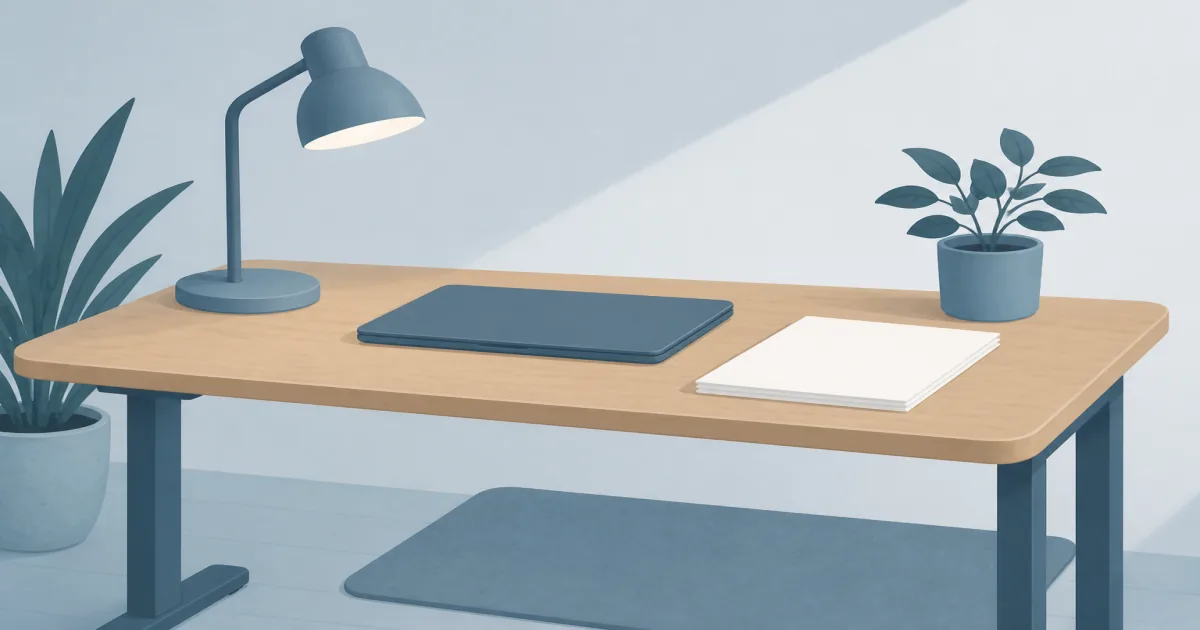
A writing desk is a compact fixed-height table for notebooks, a laptop, and daily paperwork. It is not trying to be a full dual-monitor workstation or a sit-stand platform. The good ones leave clear space for your elbows, stay shallow enough for a bedroom wall, and feel stable when you lean in to write.
If your day is mostly video calls with two screens, start with a wider computer desk or a standing desk. If you need built-in drawers for files, jump to a computer desk with drawers. This guide is for the simpler surface that still earns its keep in a home office.
More compact desk options sit in the desk accessories section.
Quick comparison
Top pick: DUMOS 47 Inch Computer Desk
The DUMOS 47 Inch Computer Desk with Drawers and Side Hook is the best writing desk for most home offices because the size plus the drawer and hook solve daily clutter without a bulky cabinet. At about 47 by 20 inches, it fits a laptop, a notebook, and a small lamp without crowding a bedroom wall. The steel frame keeps the top from feeling floaty when you write, the shallow drawer swallows pens and chargers, and the side hook gives headphones or a bag a place to live.
This is a shallow desk on purpose. That depth is perfect for writing and a single screen. It is the wrong pick if you want two large monitors side by side. For a focused writing corner, the compact footprint is the feature.
Assembly is straightforward with the usual Allen key kit. Level the feet before you load the top, especially on older floors. Once it is square, the drawer and clear surface are what you notice every day.
Compact with shelf: FURINNO Moretti Lifestyle Study Desk
The FURINNO Moretti Lifestyle Study Desk at 45 inches is the better writing desk when wall space is tight and you still want a small shelf under the top. Paper, chargers, and a notebook can sit below the typing zone instead of stacking beside the laptop. The wood-and-metal look blends into apartments without looking like a dorm leftover.
Treat the weight rating seriously. This is a study and laptop desk, not a place for a heavy tower plus dual arms. If your setup is light, the shorter width is easier to live with than a 60-inch table that fills the room.
Wider study surface: Furinno Moretti 52 Inch
The Furinno Moretti Modern Lifestyle Enhanced Study Desk keeps the same shelf idea with a 52-inch top. That extra width matters when you write longhand beside a laptop or keep reference papers open. You still get a light footprint and a simple assembly path.
Skip it if you only need a laptop and a mug. The 45-inch Moretti is enough then. Choose 52 inches when the shorter desk makes you feel like you are working on a tray table.
What to measure before you buy
- Wall width and walkway clearance so the chair can roll out.
- Desk depth against your chair and keyboard habits.
- Outlet location for a desk lamp and charger.
- Whether you need a shelf, hooks, or neither.
A home office desk setup order still helps: place the desk, set chair height, then add light and storage. Buying the largest desk in the room first is how people end up with an empty corner they cannot walk through.
Writing desk habits that keep the surface clear
Keep one notebook open zone and one closed storage zone. The open zone is for the page you are on. The closed zone is a shelf, hooks, or a small tray for pens. If everything lives in the open zone, the desk feels smaller than it is.
A shallow desk rewards that habit. You cannot hide a printer, a tower, and three monitors on a 20-inch depth. Park the printer on a printer stand if you print often. Keep the tower on the floor. Raise a laptop with a stand only after the desk and chair heights already feel right.
Light matters more on a writing desk than people expect. A single overhead bulb creates glare on paper and a laptop screen at once. A small task lamp aimed at the page, not into your eyes, is usually enough. Bias lighting behind a monitor is optional once the basic lamp is in place.
Who should skip a writing desk
Skip a compact writing desk if you need dual monitors, a full-size tower under the top, or sit-stand height changes. Those jobs need a computer desk with more depth or a standing desk. Also skip particleboard study desks if you want a solid-wood heirloom piece. That is a different budget and a different shopping trip.
If the problem is floor space rather than desk style, a wall mounted desk that folds up after work may fit better than another freestanding top. If you cannot drill and still need the surface to disappear, a folding desk that stands on the floor is the other path. For a rustic always-open look, see farmhouse desk. For a see-through tempered top, see glass desk. For a cabinet that hides the work surface after hours, see secretary desk.
Bottom line
Buy the DUMOS with a drawer and side hook for a compact writing corner that stays tidy. Buy the 45-inch Furinno Moretti when the room is small and a shelf helps. Buy the 52-inch Moretti when you want the same simple layout with more elbow room. Measure depth first, then width, then decide whether hooks or a shelf matter more than drawers. More setup ideas live on the blog and the homepage.
Frequently Asked Questions
What size writing desk do I need for a laptop?
Most people are fine with a top about 40 to 48 inches wide and 18 to 24 inches deep. That leaves room for a notebook, mouse, and a lamp. Go wider if you keep papers spread out all day.
Is a writing desk different from a computer desk?
A writing desk is usually shallower and simpler, built for notebooks and a laptop rather than dual monitors and a tower. If you need drawers beside a PC, see a computer desk with drawers instead.
Can I put a monitor on a writing desk?
Yes if the depth and load rating allow it. A single 24 or 27-inch screen usually fits. Dual monitors or a heavy ultrawide need more depth and a sturdier frame, closer to a full computer desk.
Do I need drawers on a writing desk?
Not always. Hooks and a small shelf handle headphones and notebooks for many setups. Add a desk organizer if pens and sticky notes take over the surface.
Writing desk or standing desk?
Choose a writing desk when you mostly sit and want a compact fixed-height surface. Choose a standing desk when you switch between sitting and standing during the day.
How deep should a writing desk be?
Eighteen to twenty inches works for a laptop and writing. Closer to twenty-four inches is easier if you also use an external keyboard and a laptop stand.