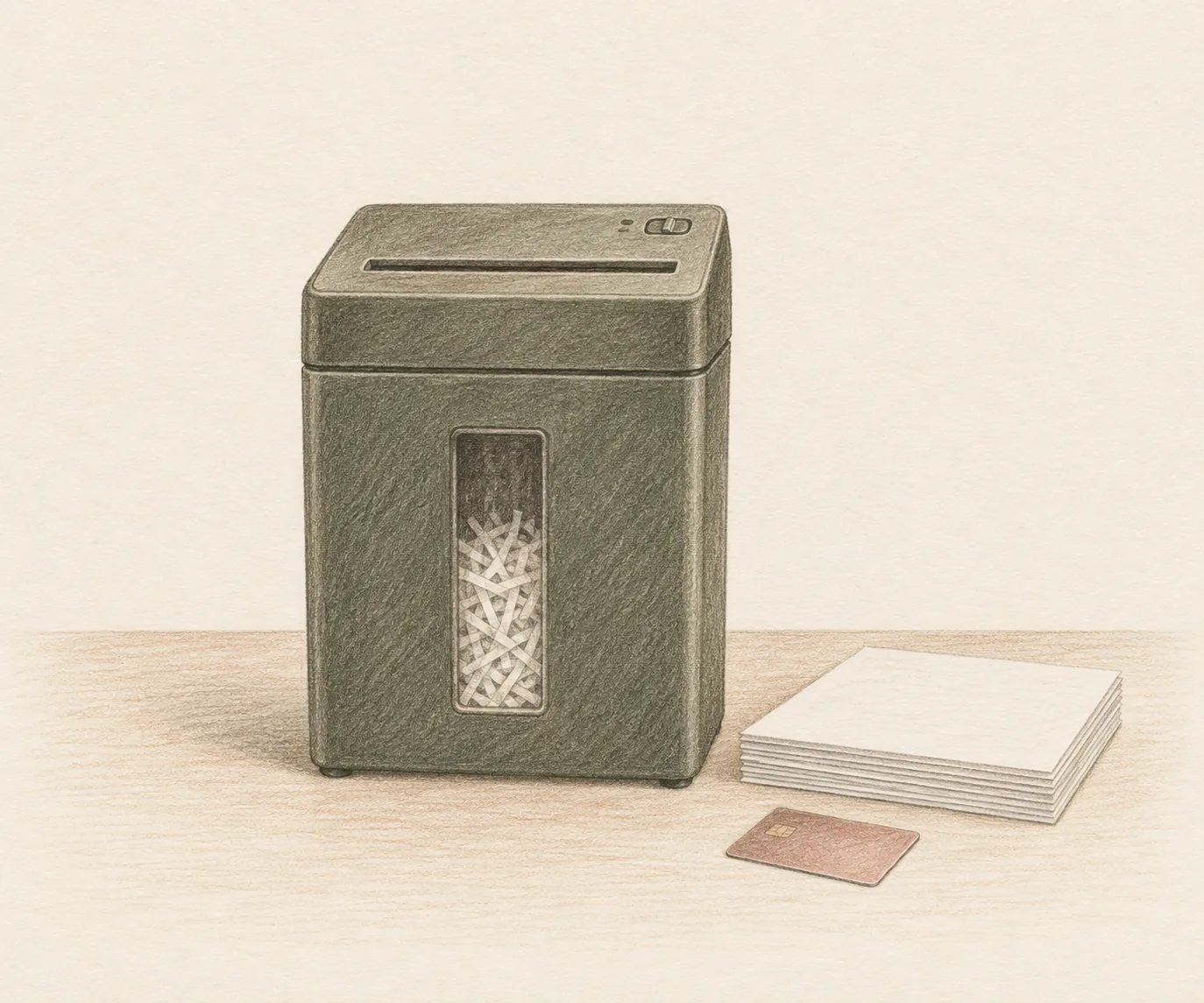
Best Paper Shredder for Home Office (2026): Secure, Quiet Picks
Desk accessories
A home office shredder has to destroy statements, cards, and mail without jamming halfway through the job. The Bonsaii C275-A is the best all-round pick, the Amazon Basics 8-sheet is the budget buy, and the Bonsaii C169-B handles bigger batches.
Our picks
A home office shredder has one job: turn a bank statement, a junk credit offer, or an old tax form into something nobody can read. The catch is that the cheap ones slow you down exactly when the pile is biggest, thanks to short run times and small bins. Pick one that matches how much paper actually crosses your desk.
A shredder is the flip side of a document scanner. The scanner turns a paper pile into files you can search. The shredder destroys the paper you no longer need. If the desk around it is crowded, a monitor arm buys back the corner where the shredder lives, and the rest of desk accessories finishes the setup.
What a home office shredder has to do
The real specs are cut security, sheet capacity, run time, and bin size. Everything else is marketing. Bank and medical paperwork deserves at least a P-4 cut, which turns a page into small pieces instead of long strips.
Run time is the spec buyers underestimate. A machine that stops after three minutes is fine for the mail. A machine that stops after three minutes when you have a box of old statements will test your patience. Match the duty cycle to your worst-case pile, not your average week.
Bin size is the other quiet factor. A 3-gallon bin fills fast with cross-cut paper, and if you let it overfill, you get a jam on top of a mess. A 5-gallon bin with a clear window tells you when to empty it before the paper backs up into the cutters.
Top pick: Bonsaii C275-A 12-Sheet Cross Cut
The Bonsaii C275-A is the best all-round shredder for a home office. It takes 12 sheets per pass and cuts them to a P-4 cross-cut, which is the level most people need for statements, cards, and medical mail. The 5.5-gallon bin means fewer trips to empty it, and the handle on the head makes that trip easy.
Auto start and stop handles the everyday feed, and manual reverse clears the occasional jam without a fight. The safety cut-out when the head lifts is the kind of detail that matters once you have a curious kid or pet in the room.
Who it is for: Households with a steady paper flow, mixed mail, and documents worth destroying properly.
Skip if: You shred once a month and want to spend as little as possible.
Shop: Bonsaii C275-A on Amazon
Best budget: Amazon Basics 8-Sheet High Security Cross Cut
The Amazon Basics 8-Sheet shredder is the low-cost way to cover the basics. It cuts to a P-4 cross-cut, shreds credit cards and staples, and fits under a desk without taking over the room. For light, regular use, that is enough.
The honest trade-off is endurance. Like most budget machines, it does best with fewer sheets than the sticker says, and the short run time means a thick pile becomes a two-session job. Treat it as a mail shredder, not a clean-out-the-filing-cabinet machine.
Who it is for: Light mail, a second desk, and buyers who want security without a big spend.
Skip if: You regularly shred a backlog or you want one machine for a two-person office.
Shop: Amazon Basics 8-sheet cross-cut shredder on Amazon
Best for bigger batches: Bonsaii C169-B 15-Sheet
The Bonsaii C169-B is the pick when your shredding comes in waves. A 40-minute run time and a 5-gallon pull-out bin let you work through a filing box in one sitting instead of stopping every few minutes. It shreds staples, credit cards, and paper, and the wheels make it easy to reposition.
Independent testing found the printed sheet maximum is optimistic, so feed it in batches of about ten sheets rather than stuffing the slot. Do that and the long duty cycle is exactly what a backlog needs.
Who it is for: Anyone with a box of old documents, a small side business, or a once-a-year purge.
Skip if: You only ever shred a few letters a week.
Shop: Bonsaii C169-B on Amazon
Cut type, run time, and bin size
Cut type. P-4 cross-cut is the home-office standard. Micro-cut is finer but slower and dustier.
Run time. Three minutes is a mail machine. Fifteen to 40 minutes is a batch machine. Buy for your biggest pile.
Bin size. Five gallons is the sweet spot. Below that you empty often, and overfilling leads to jams.
Noise. Most home units sit in the 58 to 70 dB range. If the office shares a wall with a bedroom, quieter matters.
Keeping a shredder alive
Oil the cutters with a lubricant sheet every few weeks. Skip it and the blades drag, the motor works harder, and the machine dies early. It is the cheapest maintenance you can do.
Do not overfill the bin. Cross-cut paper fluffs up more than you expect, and a full bin pushes shreds back into the cutters. Empty at the window line, not when it is packed.
Let the machine cool completely after a thermal stop. Restarting early just trips the cut-off again and stresses the motor. And keep the feed slot clear of paper clips that are not on the accepted list.
Where the shredder should live
The best spot is within arm's reach of the desk, next to a filing cabinet so the paper path is short. If floor space is tight, a rolling file cabinet can double as the shredder stand and keep the office looking tidy.
If you rarely shred, do not buy a big machine to store paper in. Shred as you go, keep the bin small, and browse more desk accessories for the rest of the setup.
Bottom line: The best paper shredder for a home office is the Bonsaii C275-A for most desks, the Amazon Basics 8-sheet for light mail, and the Bonsaii C169-B for backlogs. Match run time to your biggest pile and oil the cutters, and even a budget machine will last. More setup guides live on the blog and homepage.
Frequently Asked Questions
What is the best paper shredder for home office use?
The Bonsaii C275-A suits most home offices because it takes 12 sheets at a time, cuts to P-4 particles, and holds a 5.5-gallon bin. If you only shred a little mail, the Amazon Basics 8-sheet model costs less and does the job.
What cut type should I get, cross-cut or micro-cut?
Cross-cut is the practical floor for a home office because it turns a page into small rectangles. Micro-cut goes finer and is harder to reconstruct, but it is slower and fills the bin with dust-like particles. For statements and cards, P-4 cross-cut is enough.
How many sheets can a shredder really take?
Fewer than the box claims. Budget machines do best at about two-thirds of the printed number. Feed a rated stack slowly the first time and let the machine set the pace instead of pushing paper through.
Why does my shredder stop after a few minutes?
Almost every home shredder has a duty cycle. It runs for a set time, then shuts off to cool. The Amazon Basics model runs about three minutes, while the Bonsaii C169-B runs for 40. Let it cool fully instead of restarting it, or the thermal cut-off will keep tripping.
Is a shredder safe if I have kids or pets?
Choose one that stops when the head is lifted off the bin, like the Bonsaii C275-A. Keep it unplugged when you are not using it, and never let anyone reach into the feed slot. Auto start and stop helps, but the on-off switch is still the real safety.
Do I need to oil a paper shredder?
Yes, if you want it to last. A shredder lubricant sheet every few weeks cuts friction on the cutters and reduces jams. Skipping it shortens the life of the blades and the motor, which is the most common way a cheap shredder dies young.
Can a shredder handle credit cards and staples?
Most cross-cut home shredders can, one card at a time, plus staples and small paper clips. Skip metal credit cards. If a card is not on the accepted list, cut it up and shred the pieces instead.
What should I do with the shredded paper?
Mix it into recycling rather than dumping it in a single bag so it does not compact into a block at the plant. If you compost, plain paper shreds are a decent brown layer, but keep glossy or coated paper out of the pile.